Diagnostic Dashboard
Global Biases
Climate Variability (ERA5)
CMIP6
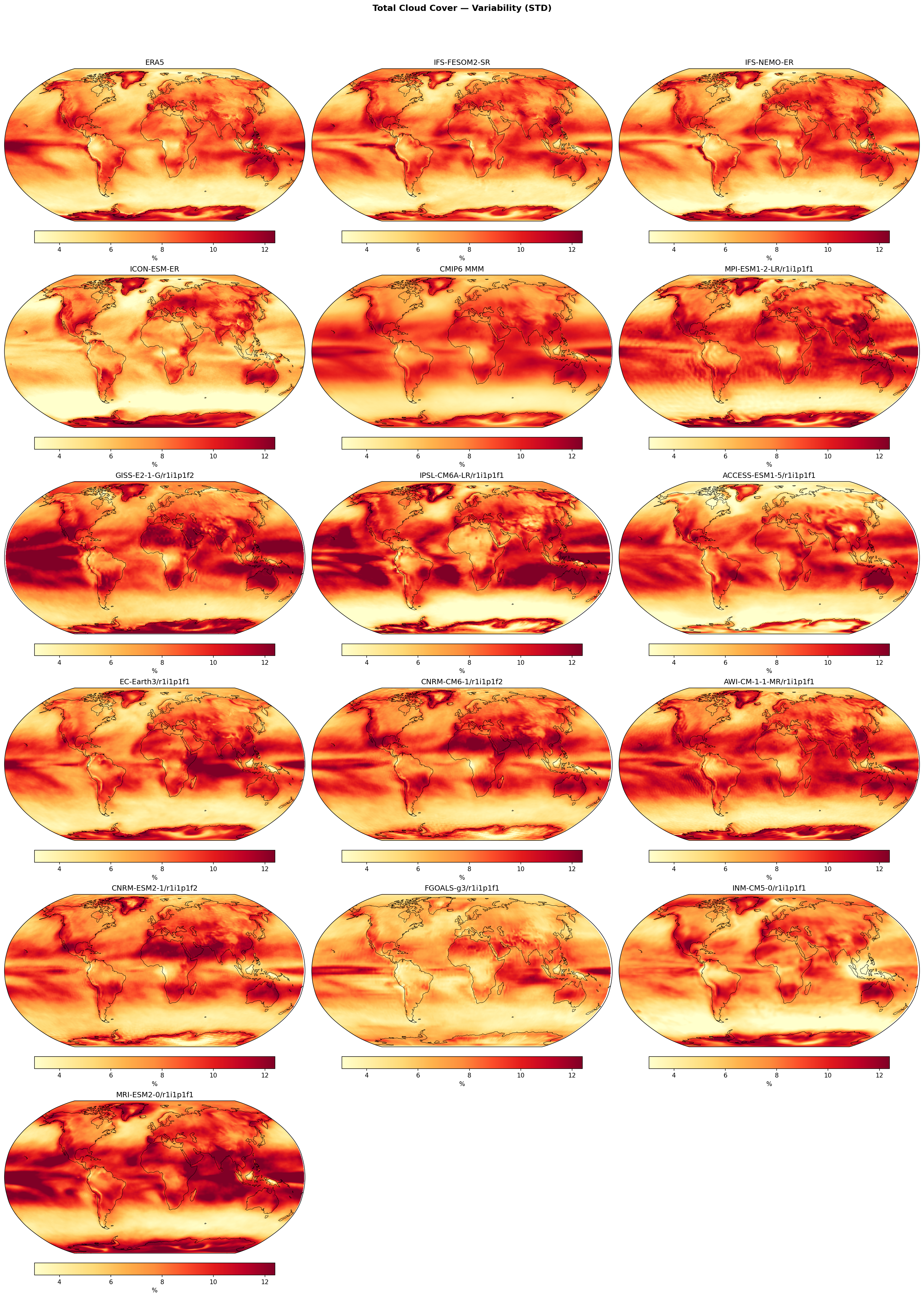
IFS-NEMO-ER and IFS-FESOM2-SR effectively reproduce observed climate variability, eliminating the excessive tropical noise found in CMIP6, whereas ICON-ESM-ER systematically suppresses extratropical storm track dynamics while overestimating land-surface volatility.
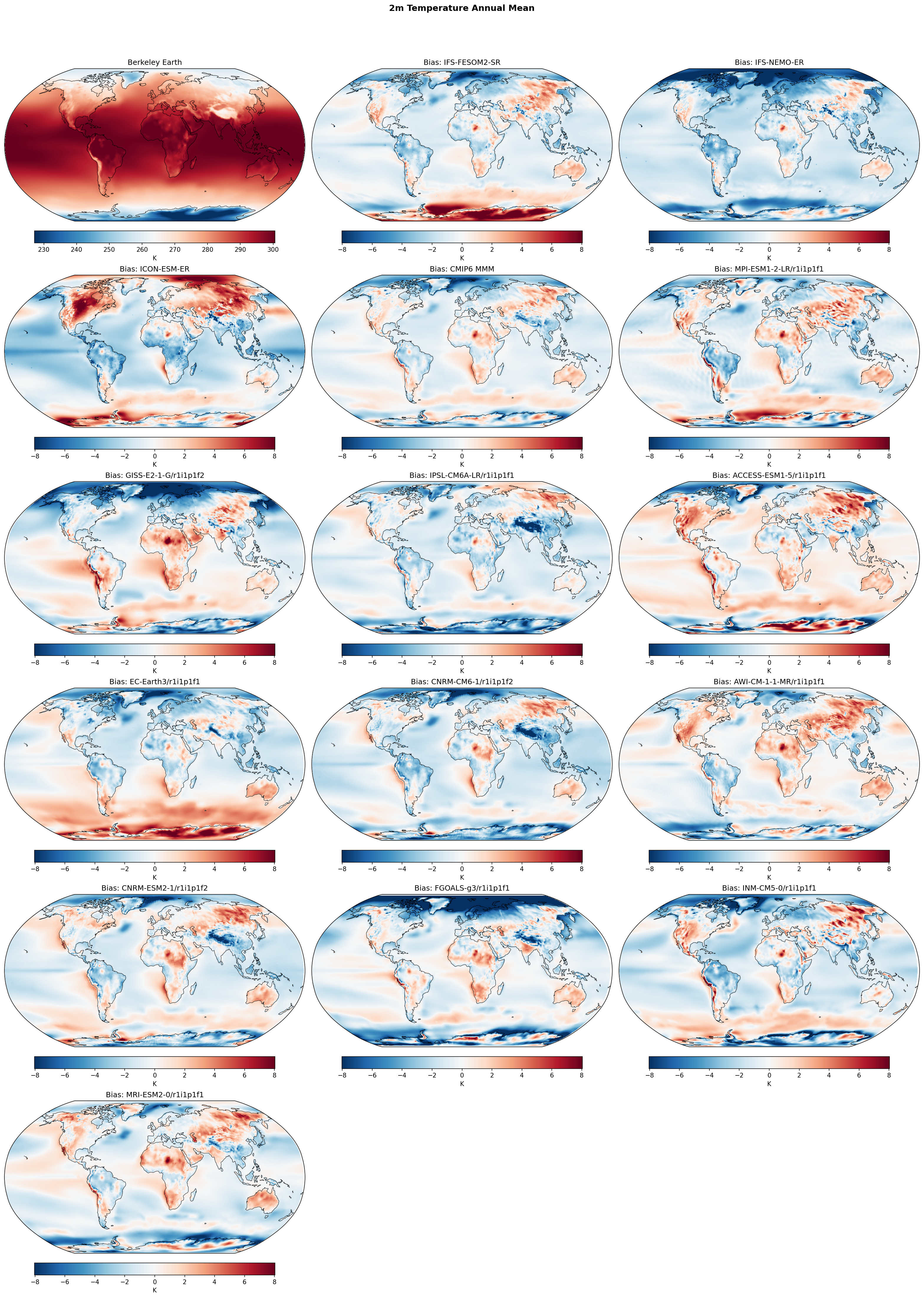
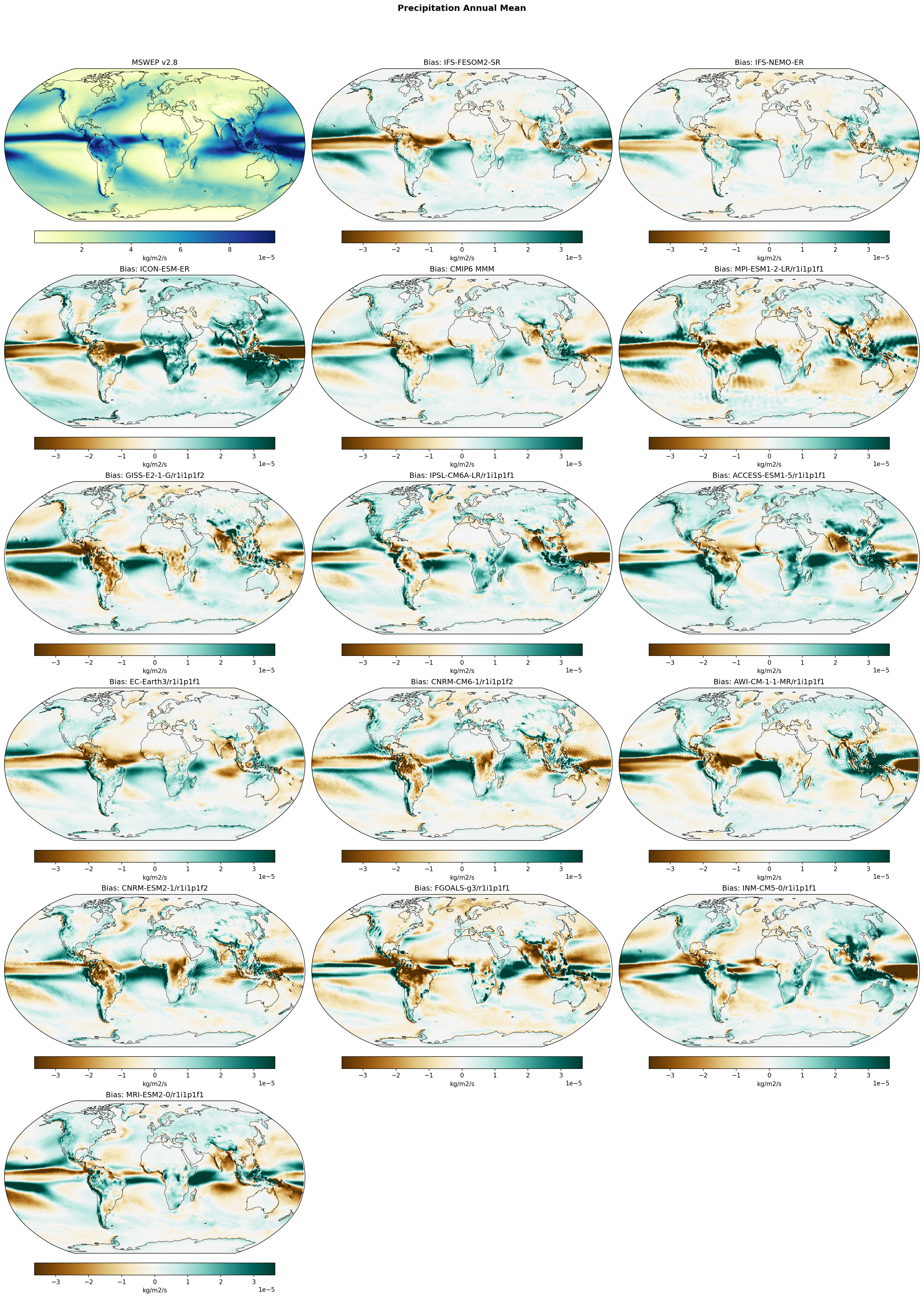
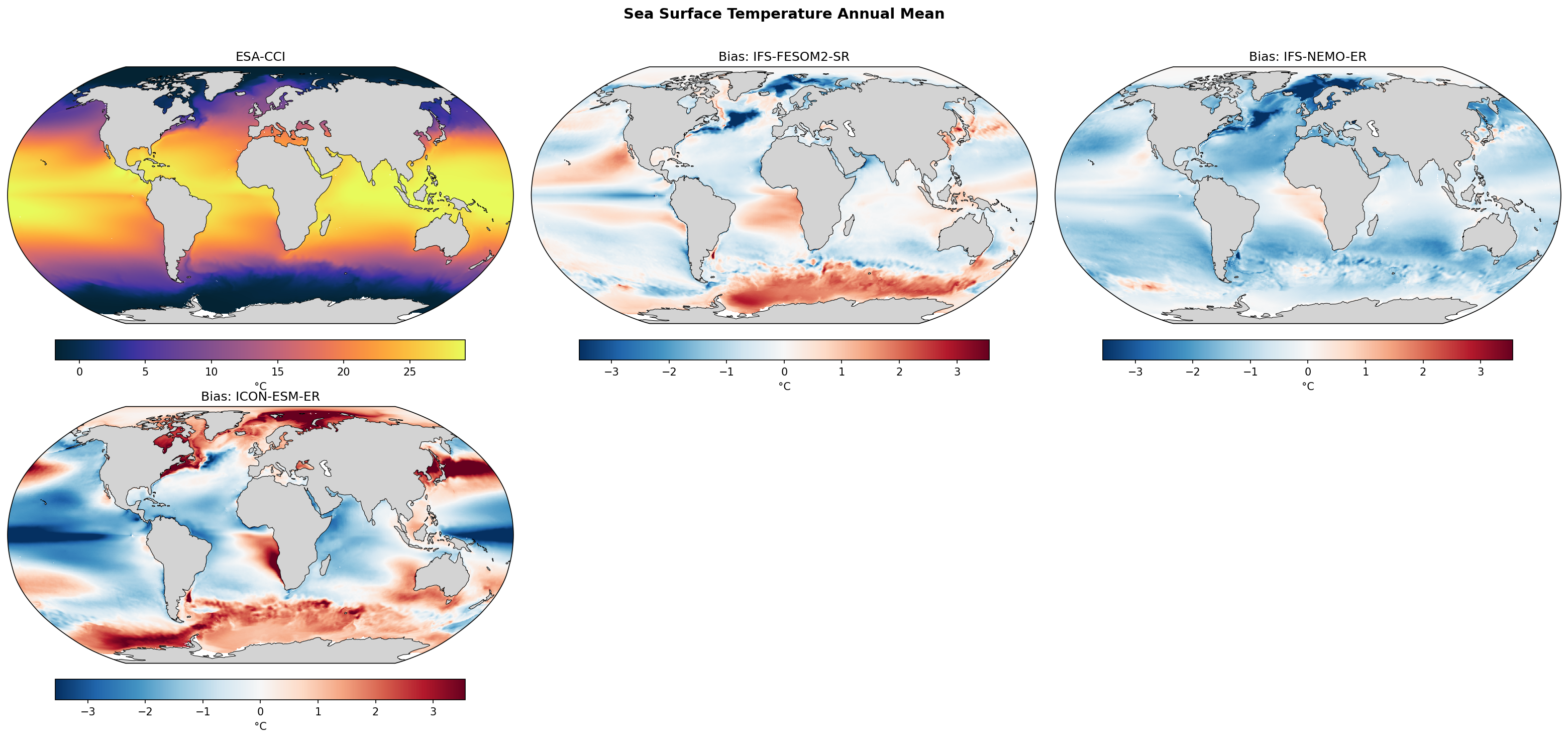
Global Climatology Biases
CMIP6
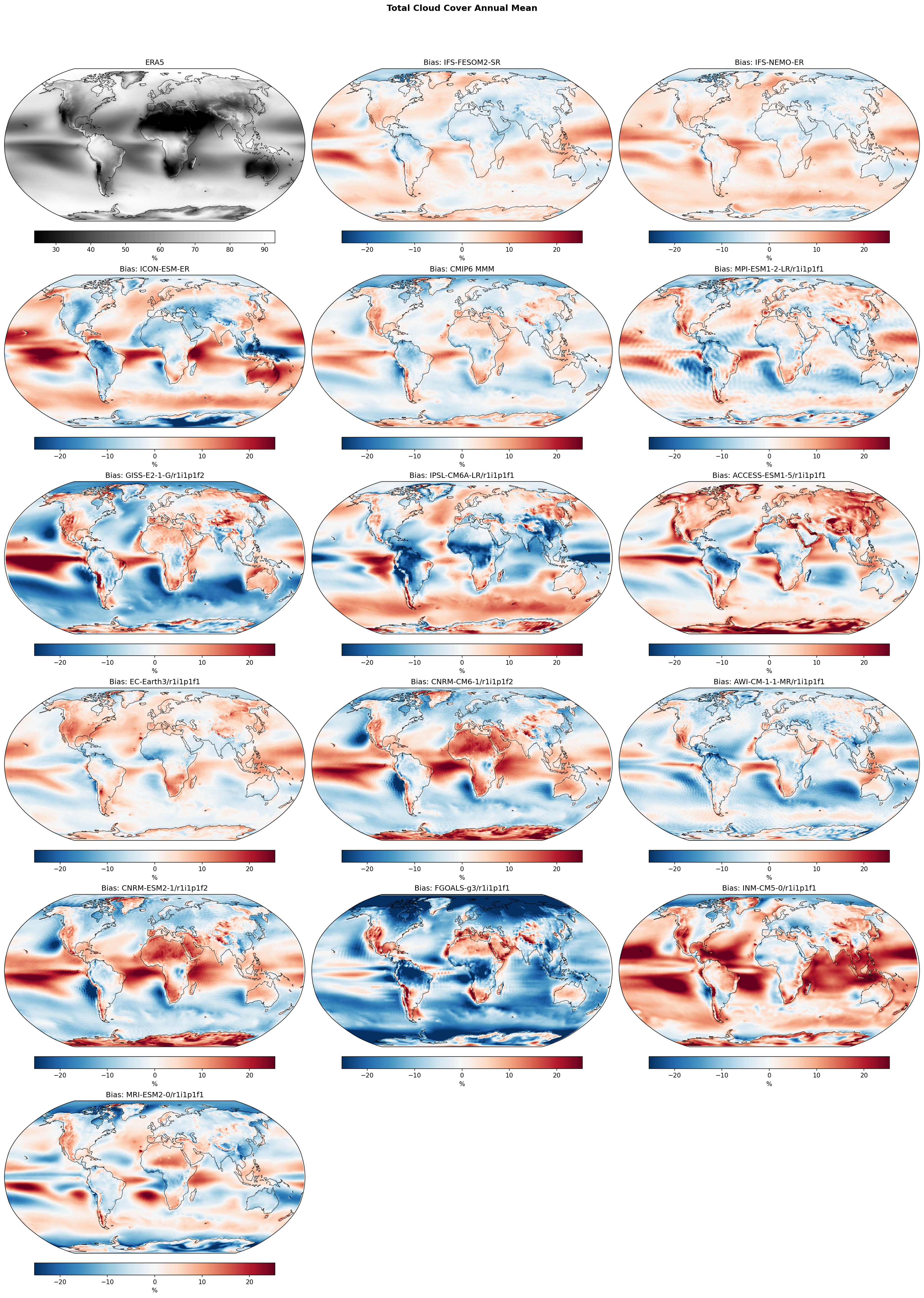
While IFS-based high-resolution models significantly outperform CMIP6 and ICON-ESM-ER in reproducing global circulation, kilometric-scale resolution fails to rectify persistent structural biases in marine stratocumulus clouds and tropical precipitation.
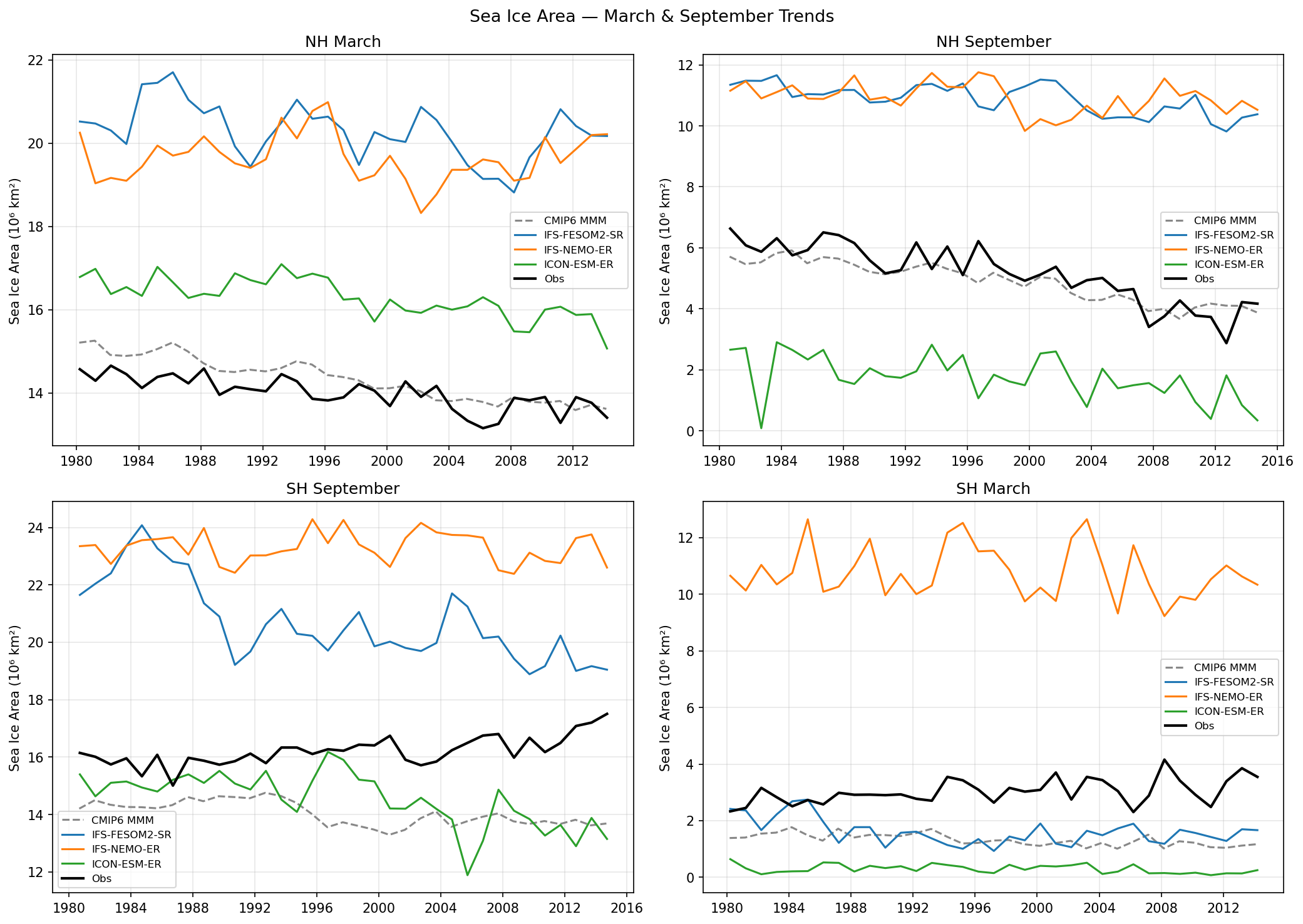
Global Linear Trends
CMIP6
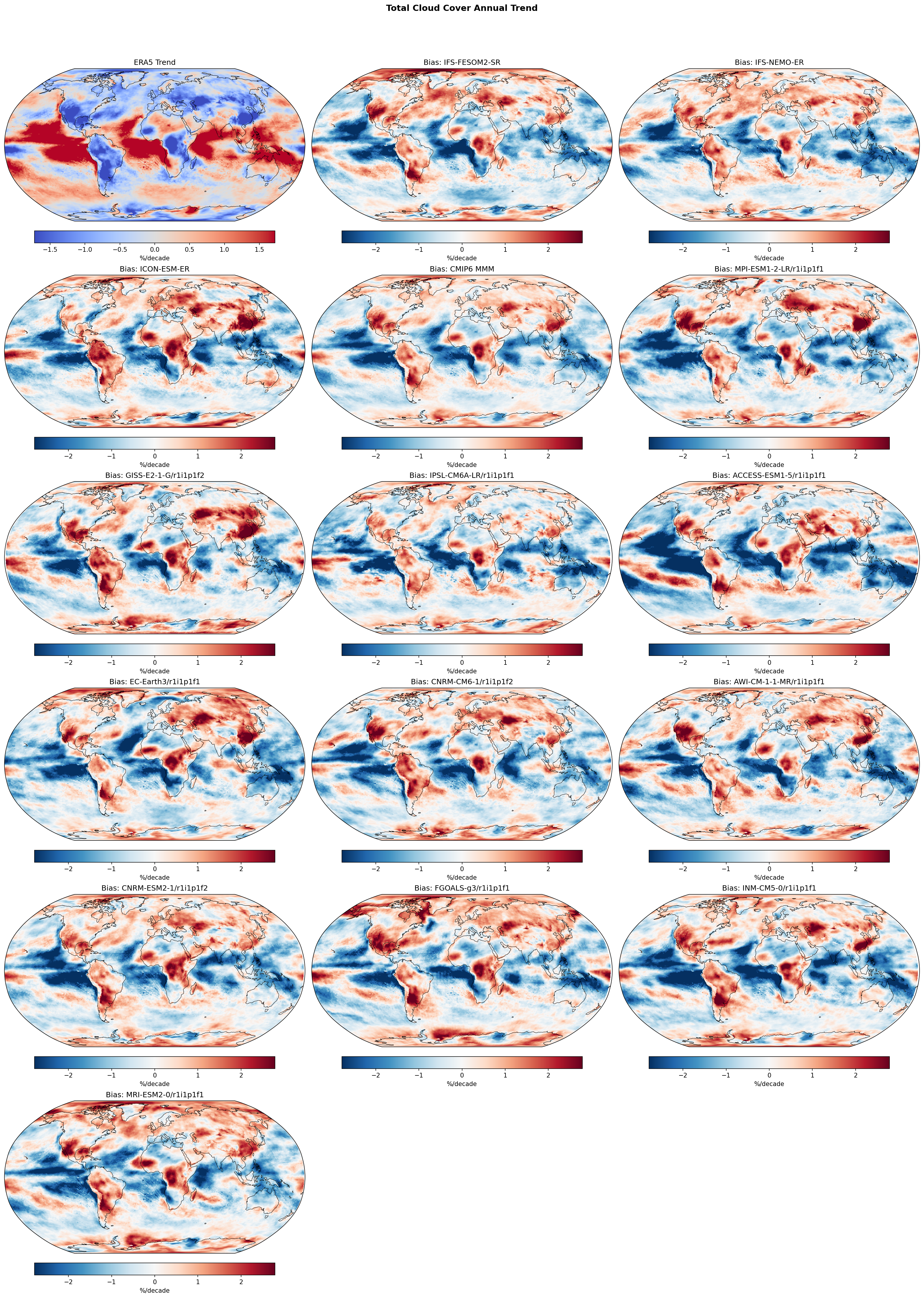
High-resolution coupled models fail to capture the observed 1980–2014 intensification of the Pacific Walker Circulation and Southern Ocean cooling, exhibiting systematic trend biases indistinguishable from standard-resolution CMIP6 ensembles.
Seasonal Cycle
CMIP6
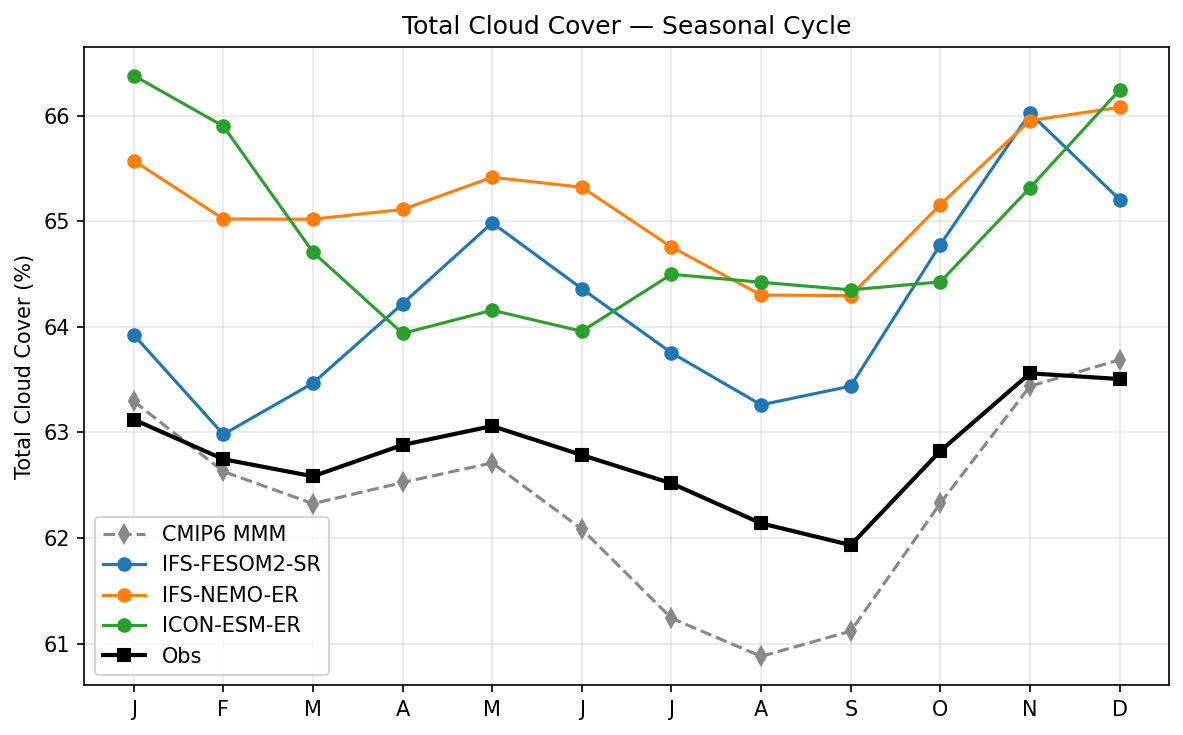
IFS-FESOM2-SR demonstrates exceptional skill in reproducing global thermal and radiative cycles, contrasting with severe cold biases in IFS-NEMO-ER and an overly aggressive hydrological cycle in ICON-ESM-ER and HadGEM3-GC5.
Climate Variability Modes
CMIP6
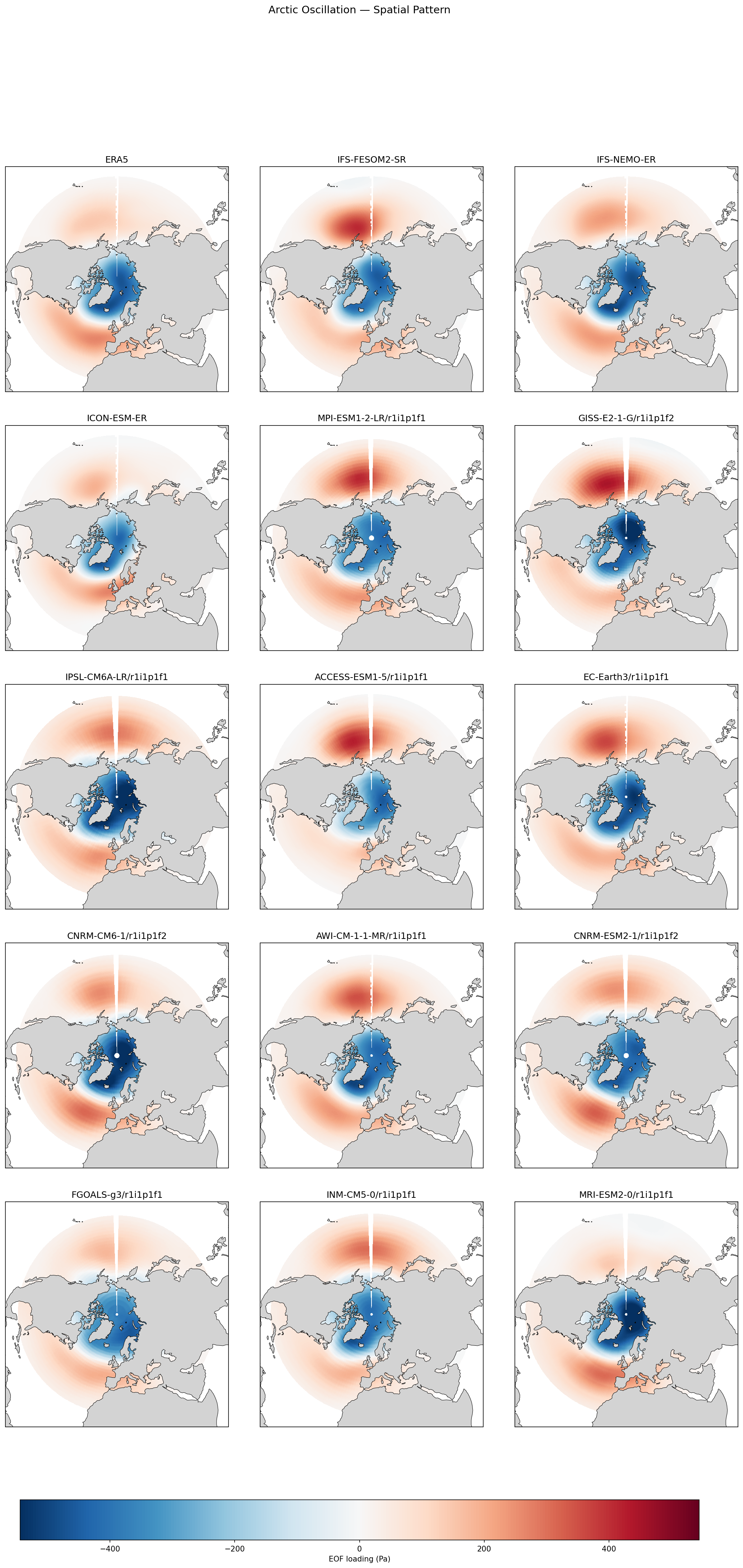
IFS-based models demonstrate superior fidelity in extratropical annular modes and stratospheric QBO dynamics, while tropical variability exhibits a massive spread ranging from the critically damped ICON-ESM-ER to the hyper-active HadGEM3-GC5.
Global Mean Time Series
CMIP6
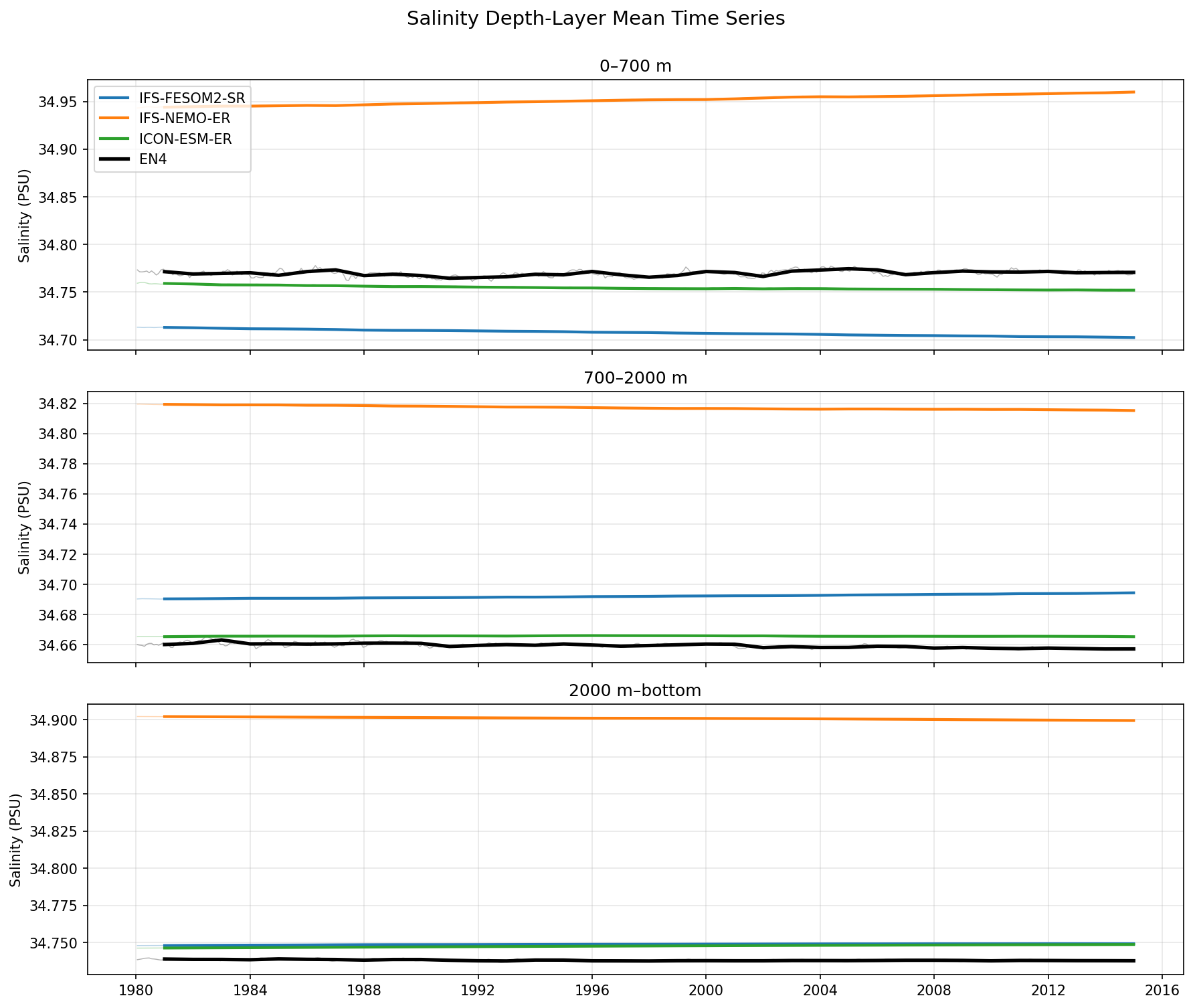
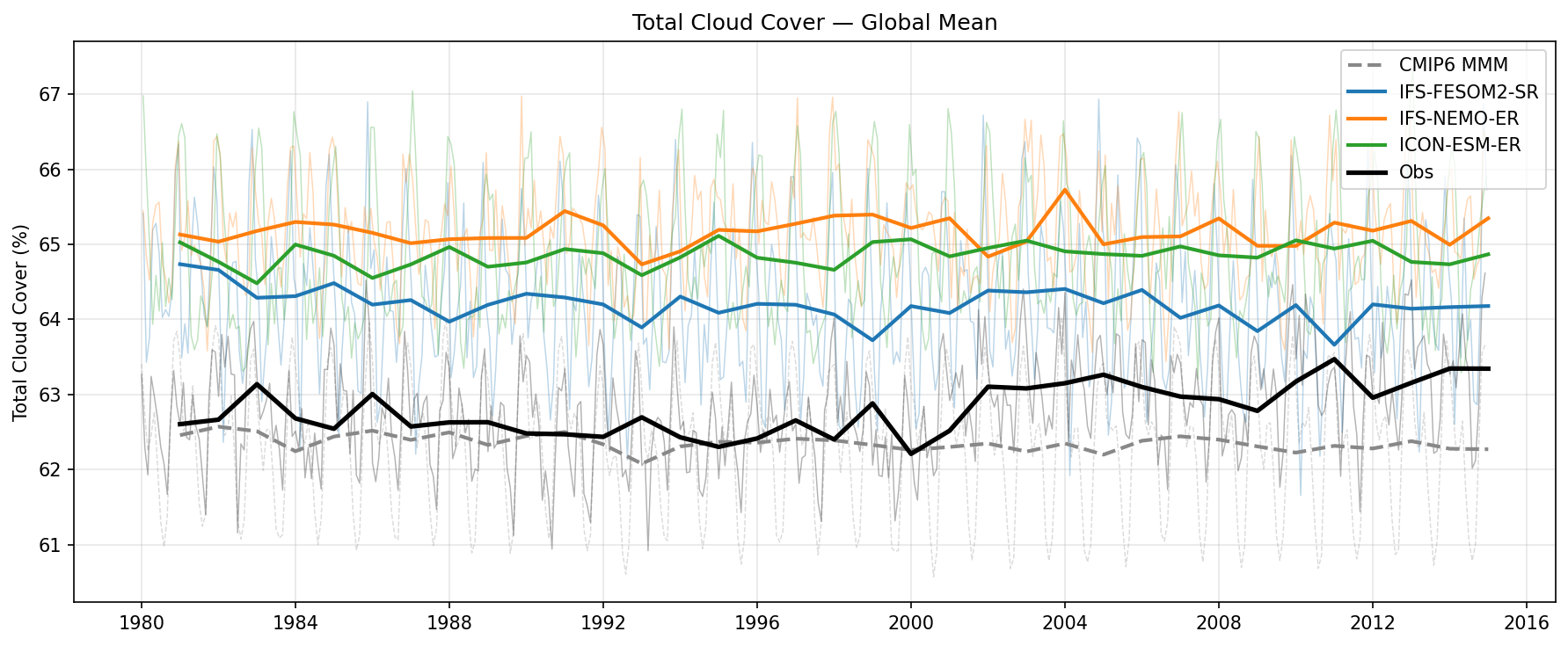
IFS-FESOM2-SR closely matches observational baselines, whereas IFS-NEMO-ER exhibits a self-reinforcing cold/dry bias and ICON-ESM-ER simulates an accelerated hydrological cycle driven by excessive solar input.